Water House in Hulice
| Study | 2010 |
| Project | |
| Realization | |
| Authors | Jan Šépka, Cyril Říha |
| Collaboration | Marek Přikryl, Martina Vlnasová |
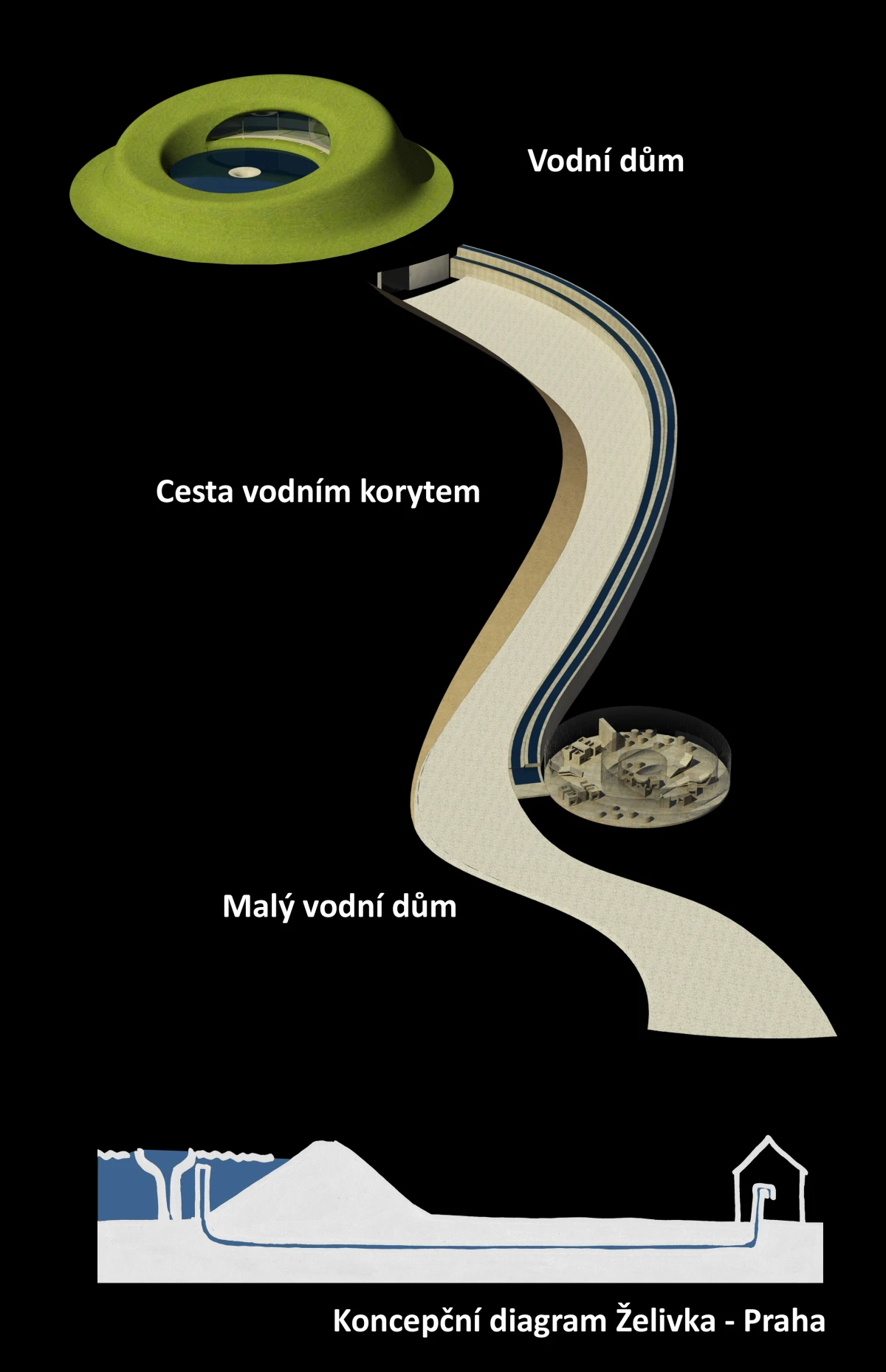
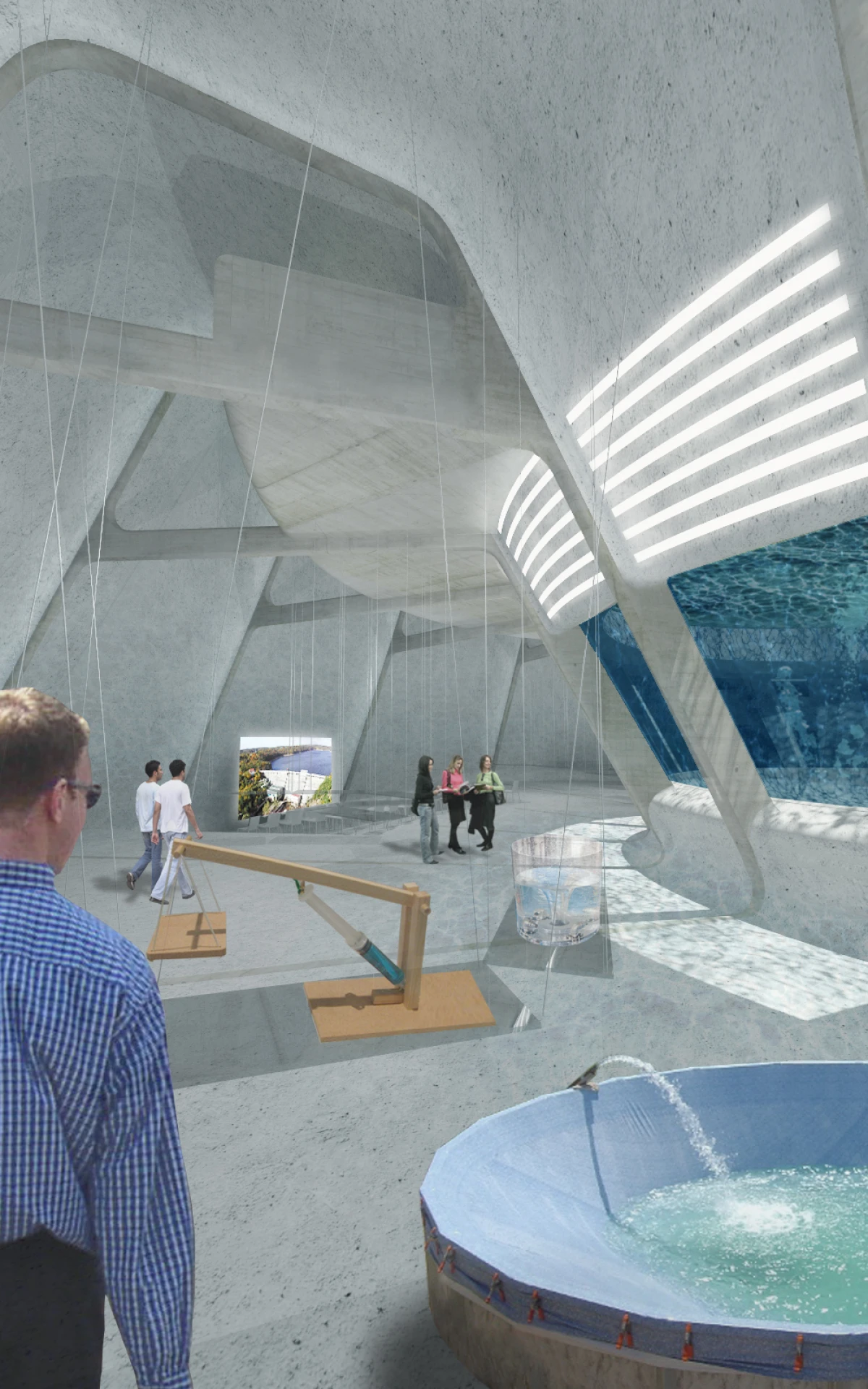
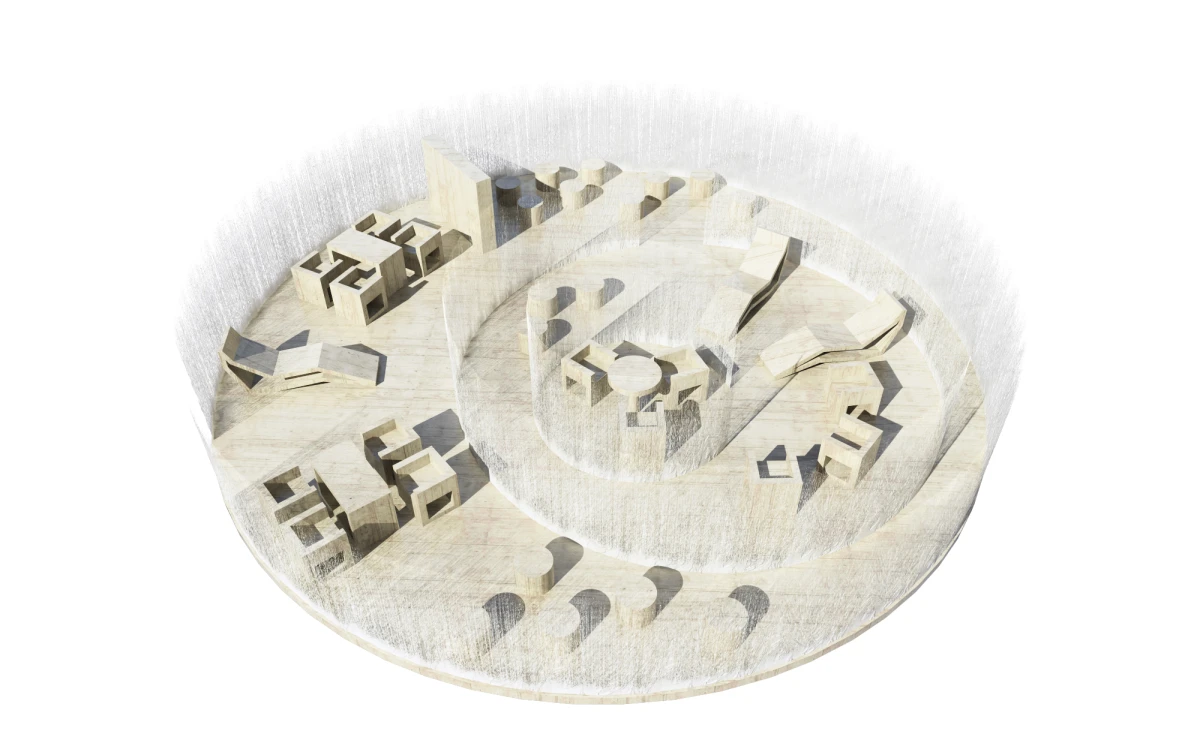
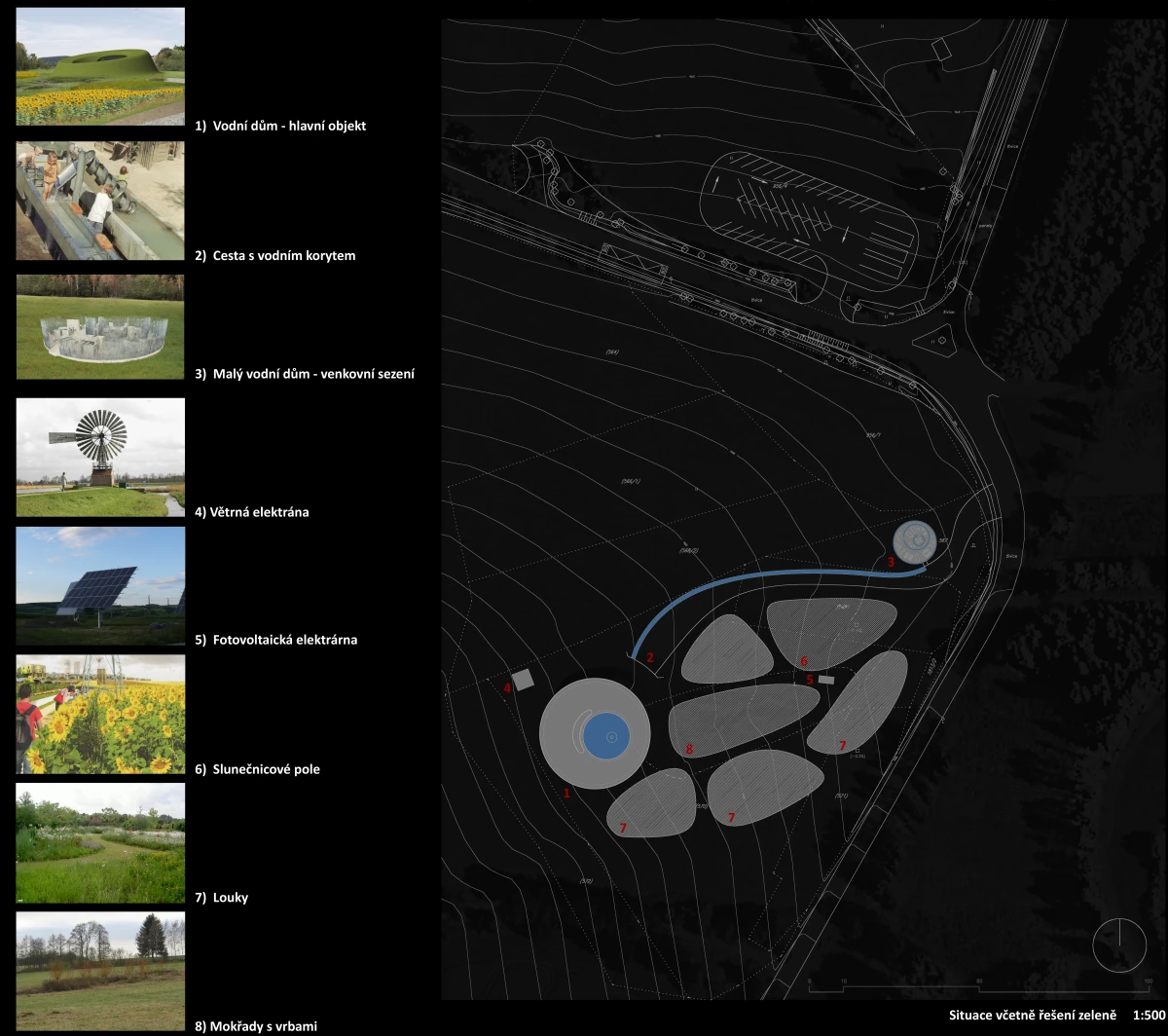
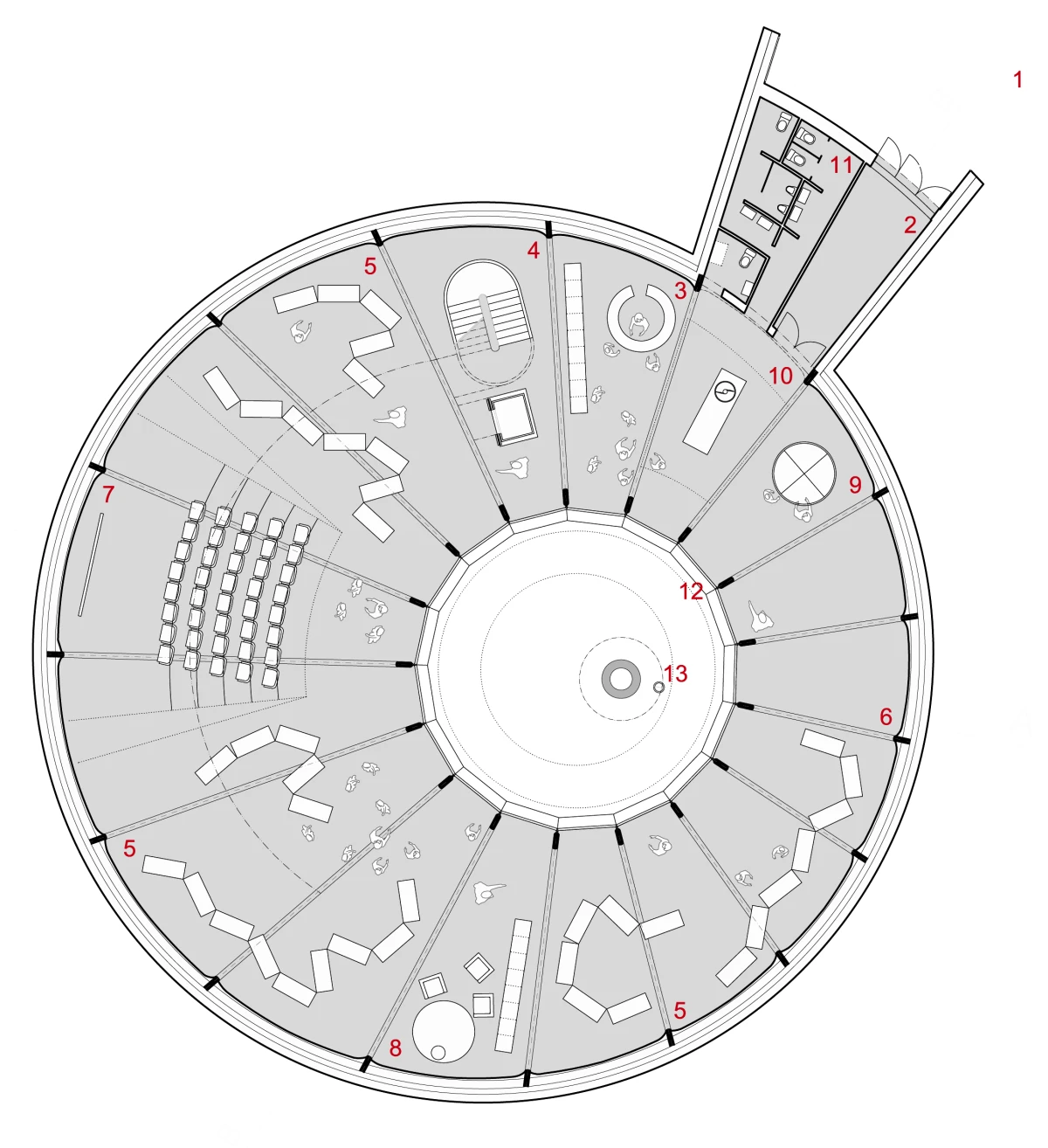
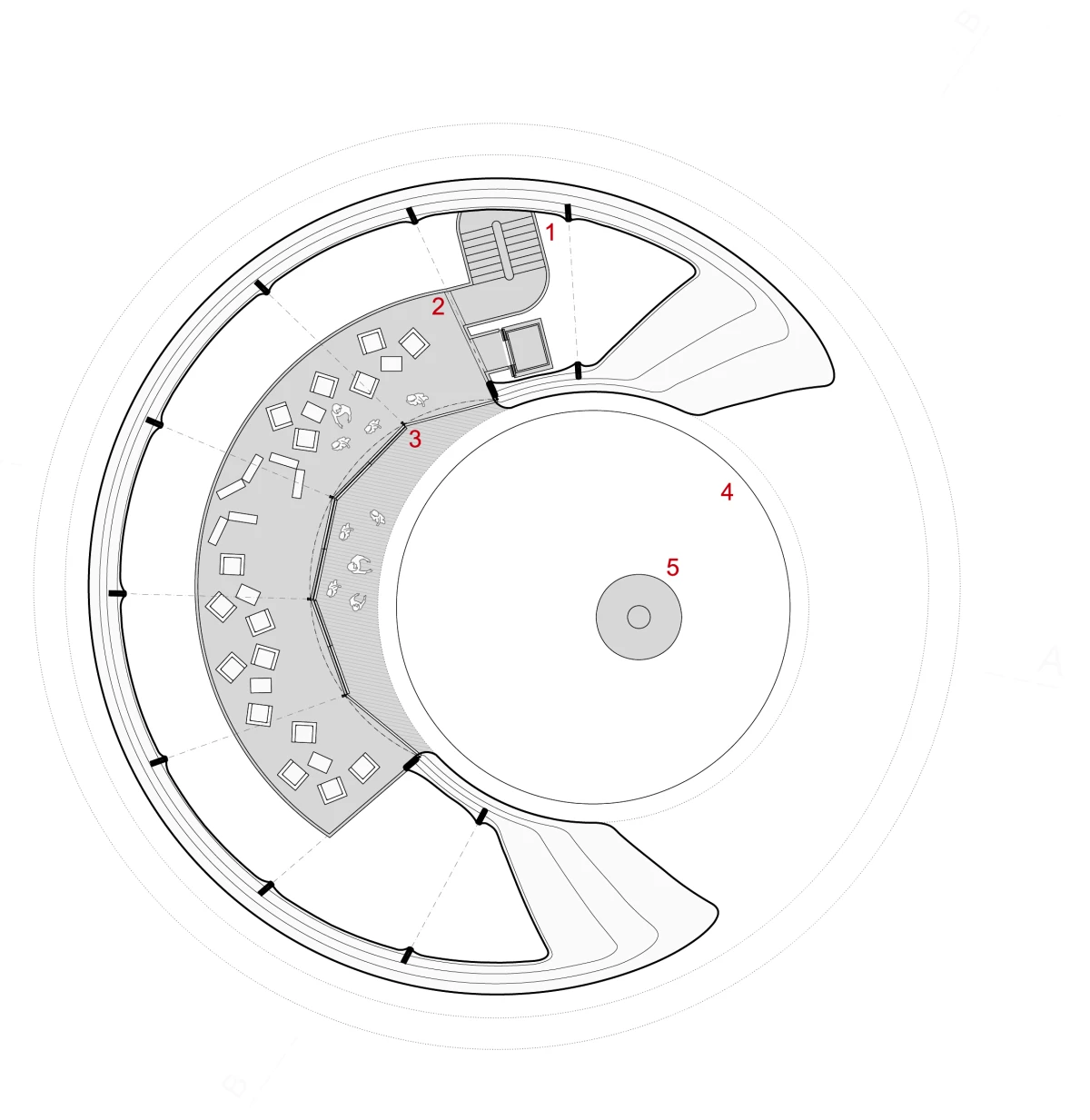
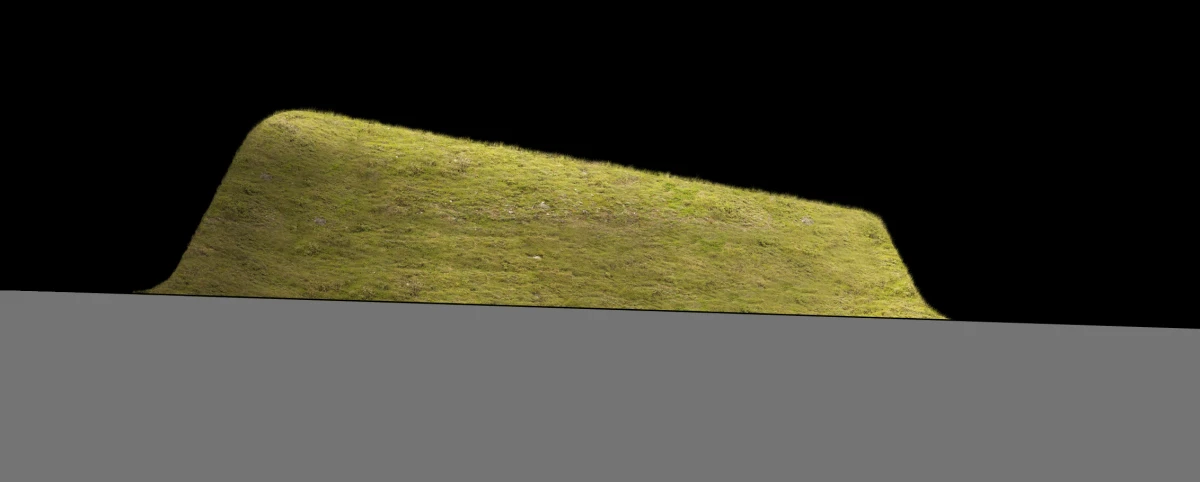
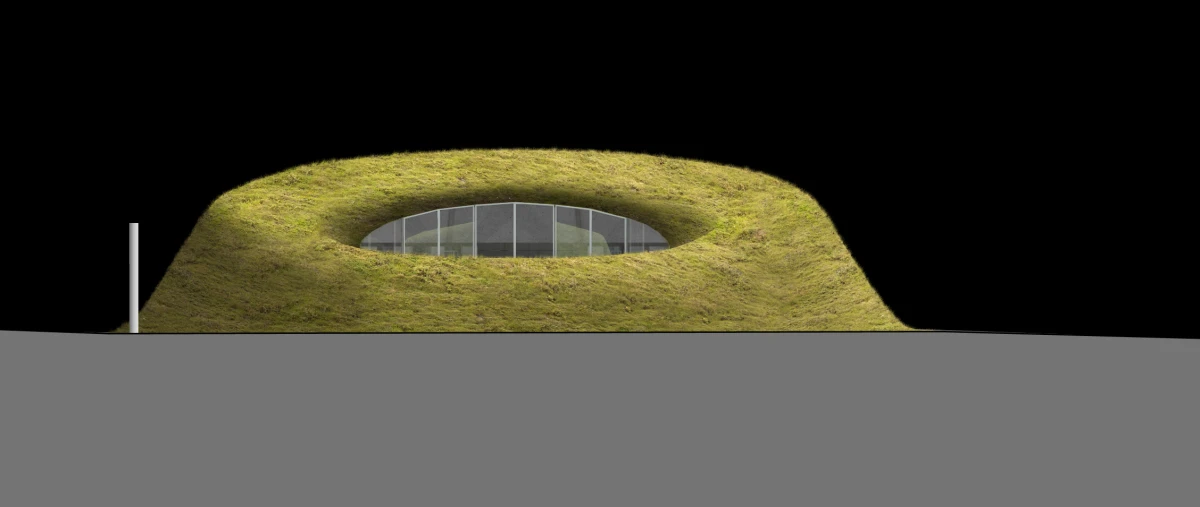
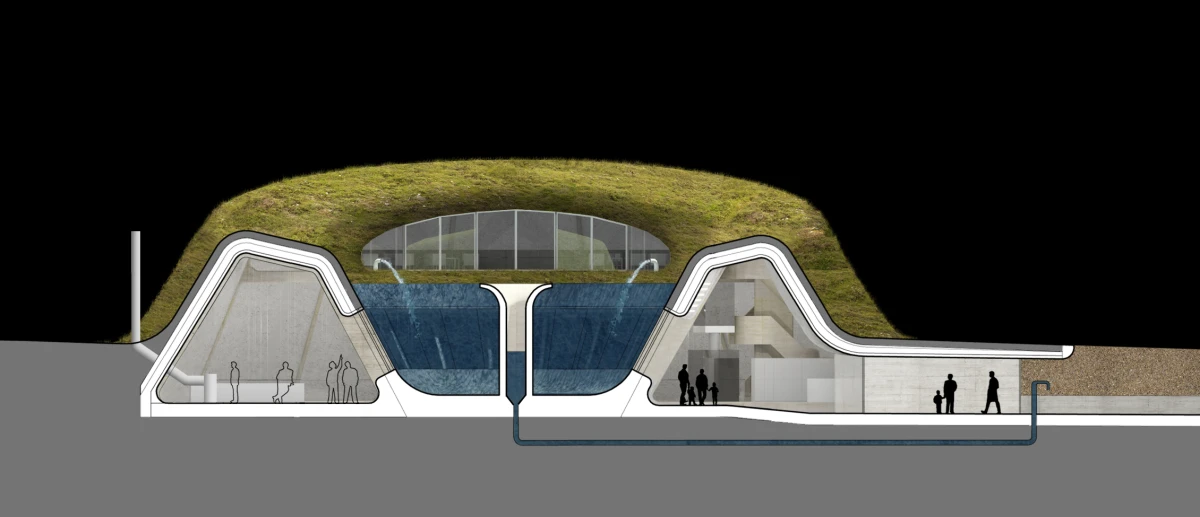
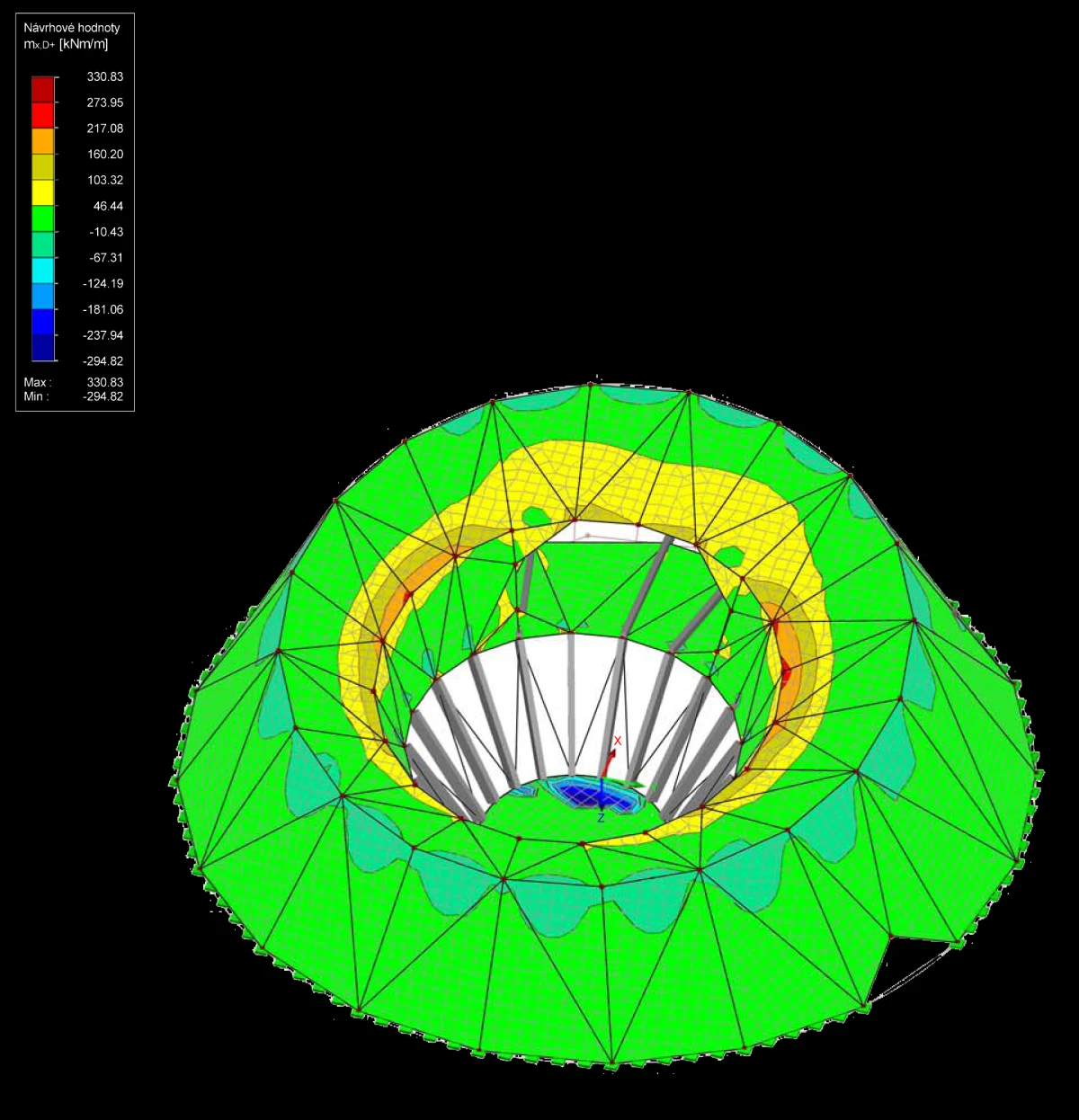
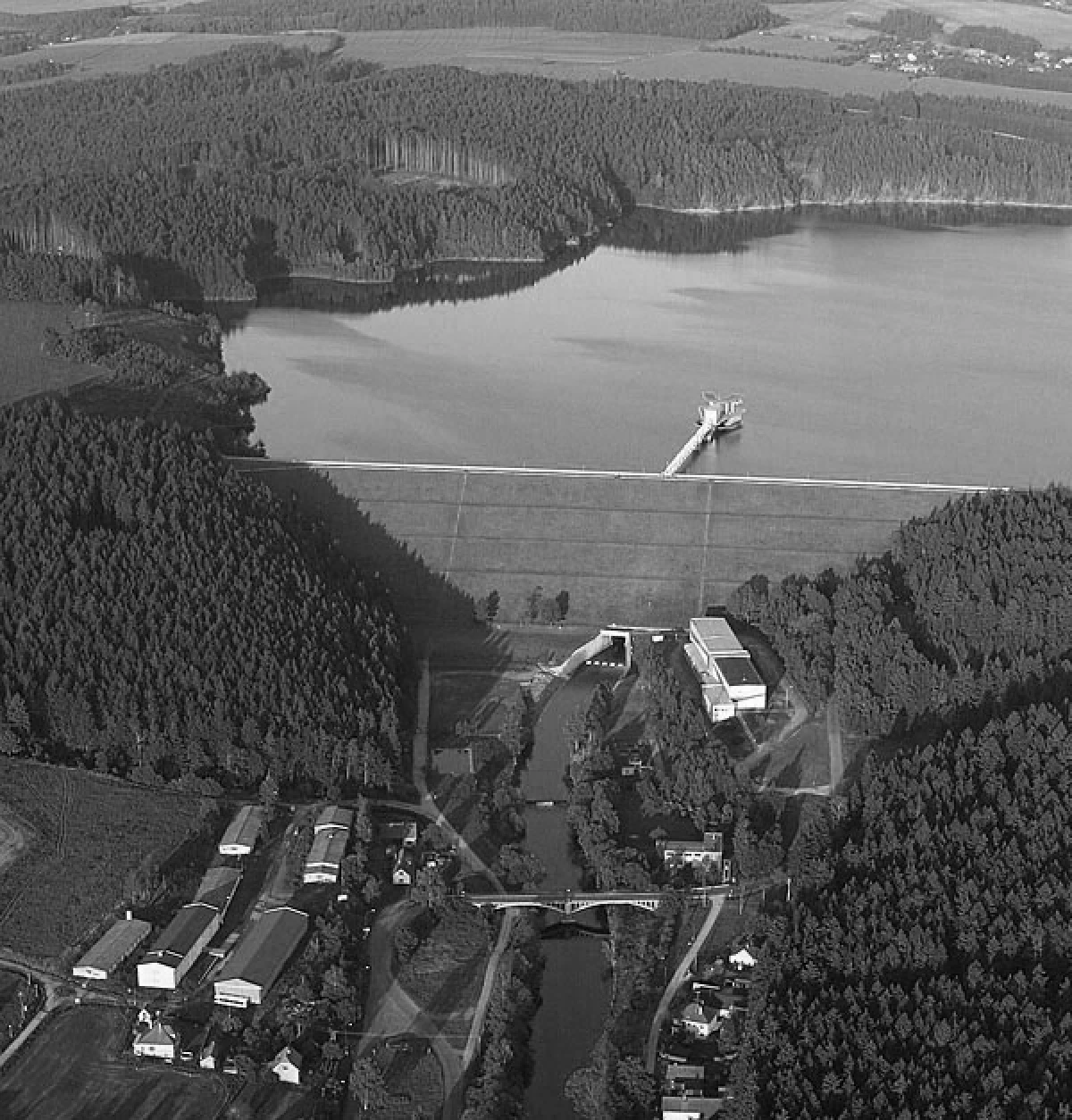
The design of the so-called water house is a response to a very specific assignment. We have supposed that the visitor is coming to the given locality predominantly because he/she would like to find out something about the Želivka Reservoir – about its form, operation and particularly about the way it supplies drinking water to the capital city of Prague. Since the visitor is not allowed direct access to the reservoir because of the protected zone, the design attempts in an abstracted form to compensate for everything that happens with water in the framework of this water work. The design presents the three phases which water must undergo before it reaches its users. The main structure of the whole complex is the Water House building. It is a circular structure slightly sunken into the ground and almost entirely overgrown with grass, in whose centre there is a water reservoir with a capacity of 400 m3 representing a miniature model of the Želivka Water Reservoir including the facilities for the withdrawal and purification of water and the acquisition of energy from the water. Another element is the connecting path with the water channel flow through which the water is led to the ‘Little Water House’, which is in the figurative sense our household. This building is divided into more intimate areas by means of three unclosed circular water walls. The individual ‘rooms’ are furnished with abstracted concrete mobiles. From there, it is then led using a pump back into the main building, where it simulates the natural influx of water. Structurally, the proposed circular shape of the Water House is ideal for the great water pressure as well as of the surrounding soil. The bearing construction is comprised of reinforced-concrete ribs, which are braced in the whole area by a plate. The model of the water reservoir in the interior is surrounded by exhibits on the topic of water, which are placed on the plates hanging in the space. The point is to create the illusion of elements floating in the space. The visitor thus finds himself/herself in a milieu that provides an unusual experience of getting under the water’s surface. The question offers itself here who is in the aquarium in this case – the visitor or the water?